
AI is Changing How People Discover Brands. Is Your Marketing Ready?
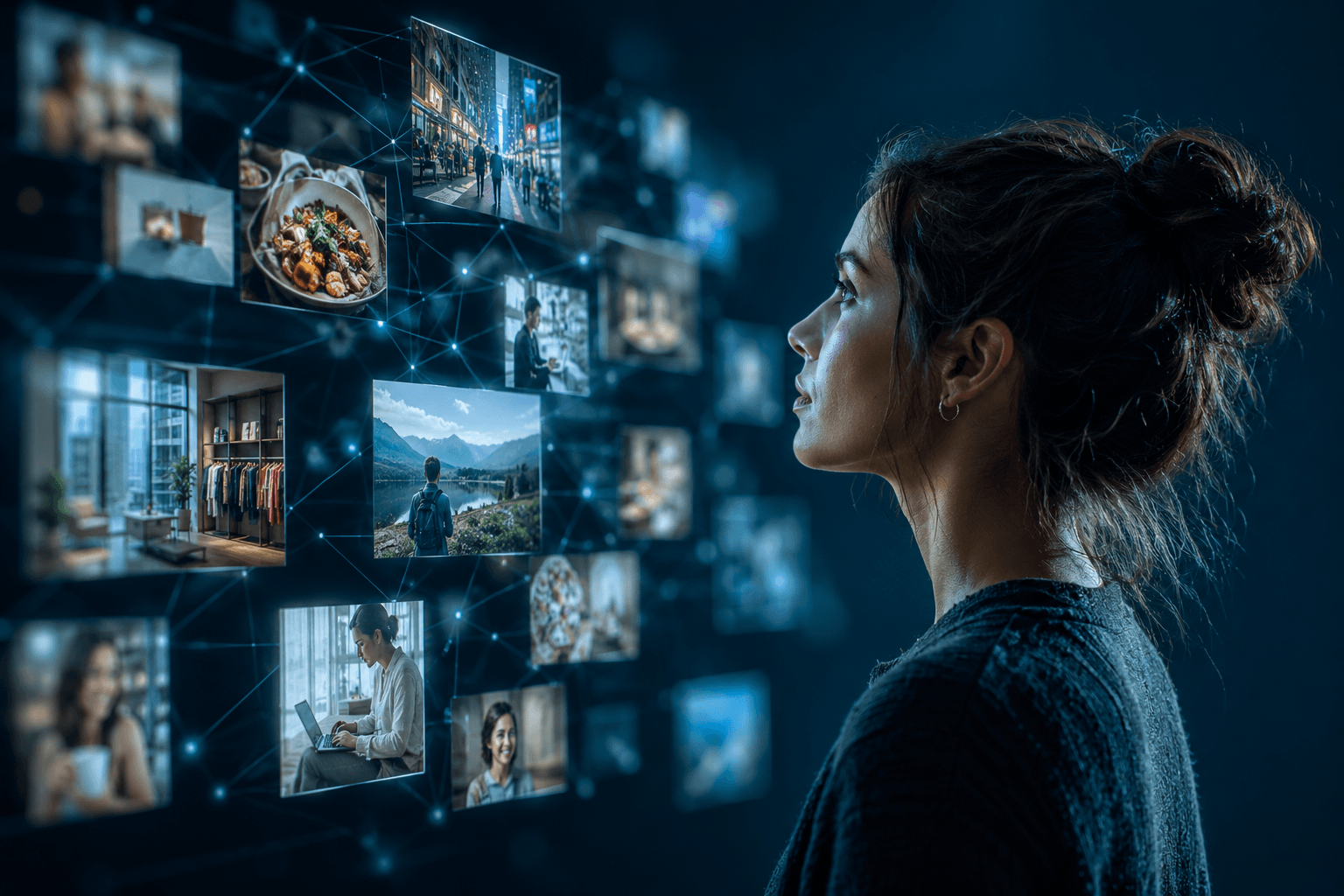
For years, digital discovery followed a relatively predictable path. Someone had a question, typed it into Google, scanned the search results, and clicked through to a website.
That journey is becoming much more fragmented.
Today, someone looking for a restaurant, software platform, hotel, consultant, product, or service might start with Google. But they might also ask ChatGPT, search TikTok, browse Instagram, watch YouTube reviews, read Reddit threads, or encounter a brand through an algorithmic recommendation before actively searching at all.
And even Google itself looks increasingly different. AI Overviews and AI Mode are moving search toward a more conversational experience where users can ask detailed questions, receive synthesized answers, and continue asking follow-up questions without starting a new search.
For marketing teams, this creates an important shift in strategy: being discoverable can no longer mean ranking well in traditional search results alone.
Search Is Becoming a Conversation
One of the biggest changes is the way people formulate searches.
Traditional search often encouraged short, keyword-focused queries:
- “best hotels in San Diego”
- “email marketing software”
- “Orange County marketing agency”
Conversational AI allows people to get much more specific:
- “What are some boutique hotels in San Diego near good restaurants that would work for a quiet weekend getaway?”
- “What email marketing platform is best for a small business that has outgrown Mailchimp but doesn’t need an enterprise solution?”
- “Find a digital marketing consultant in Orange County who can help with social media, content, SEO, and overall strategy.”
These longer, more nuanced questions introduce context that traditional keyword searches often lacked. Google says AI Mode queries have more than doubled every quarter since its launch and that the feature surpassed one billion monthly users globally. Google has also continued integrating AI Overviews and AI Mode into a more conversational Search experience.
ChatGPT is evolving in a similar direction. Product discovery, for example, can now involve describing exactly what you’re looking for, comparing options, refining recommendations through follow-up questions, and researching a purchase within the same conversation.
That changes what marketers are optimizing for.
The question is no longer simply, “Can we rank for this keyword?” It’s also, “Would an AI system understand who we are, what we offer, who we’re right for, and why we’re credible enough to recommend?”
Your Website Still Matters, But Its Role Is Evolving
With all the conversation around AI search, it can be tempting to assume traditional SEO is becoming irrelevant. It isn’t.
AI systems still need information to work with, and Google continues to emphasize links to websites, original content, and trusted sources within its AI search experiences. Recent updates to AI Mode and AI Overviews have specifically focused on making relevant websites and original sources easier for users to discover.
A strong website remains one of the clearest ways a brand can establish what it does, demonstrate expertise, answer customer questions, and provide authoritative information about its products or services.
But optimizing that website increasingly requires thinking beyond a handful of target keywords. Content should clearly communicate entities, topics, expertise, relationships, locations, services, and context. Pages should answer the questions real customers ask. Original insights and first-hand expertise become more valuable when the internet is flooded with generic AI-generated content.
This is where SEO and AI optimization increasingly overlap. Good content needs to work for humans, traditional search engines, and AI-powered discovery systems.
Social Media Is Becoming Part of Search
At the same time, discovery is moving beyond websites. TikTok, Instagram, YouTube, Reddit, and other platforms increasingly function as research tools. Someone considering a restaurant may want to see what the food actually looks like. A traveler might watch hotel walkthroughs. A marketing professional comparing software might look for candid reviews and demonstrations.
People aren’t always looking for the most technically optimized answer. Sometimes they’re looking for experience, perspective, visual proof, or recommendations from people they trust.
The distinction between “social media content” and “search content” is consequently becoming less clear.
Google itself recently began expanding the ways creators and businesses can understand how content from platforms such as Instagram, TikTok, X, and YouTube appears in Google Search, another indication that social content is becoming part of the broader search ecosystem.
Need a Fresh Marketing Perspective?
Ready to attract more of the right customers, improve your marketing performance, or simply need an experienced partner to guide your next steps? We'd love to help.
For marketing teams, this means organic social content deserves to be treated as a discovery asset rather than something that disappears after a few days in the feed. Captions, video titles, spoken language, descriptions, on-screen text, and the topics your brand consistently discusses all help establish what your content is about.
A strong social strategy should increasingly consider a simple question: What might someone search for that should lead them to us?
Discovery Is Becoming Less Linear
This shift also makes the traditional marketing funnel increasingly difficult to see.
Imagine someone discovering a company through an Instagram Reel. A week later, they search the company name on Google. They read a blog post but don’t convert. Later, they ask an AI assistant to compare several options. They see the company mentioned again. Then they return directly to the website and submit an inquiry.
Which channel deserves credit?
The answer isn’t particularly satisfying for a dashboard: all of them played a role.
Marketing attribution has never been perfect, but fragmented discovery makes relying exclusively on last-click conversions even more problematic. Marketing teams need to look at a broader collection of signals, including branded search, organic visibility, social engagement, referral traffic, direct traffic, assisted conversions, email growth, qualified leads, and ultimately business outcomes.
A decline in clicks from one channel doesn’t necessarily mean fewer people are encountering the brand. Increasingly, discovery can happen before someone ever reaches your website.
So, What Should Marketing Teams Do Now?
There’s no need to abandon your existing SEO strategy and start chasing every new acronym that appears on LinkedIn. There is, however, a strong case for widening the definition of search optimization.
Start by looking at your brand through the eyes of someone, or something, trying to understand it.
Make your positioning unmistakably clear. Your website should quickly communicate what you do, who you serve, where relevant, and what makes your expertise credible.
Create content around real questions. Think beyond keywords and consider the detailed questions prospects ask during research, evaluation, and decision-making.
Invest in original expertise. AI can summarize existing information remarkably well. Your competitive advantage comes from contributing something worth summarizing: original research, first-hand experience, expert commentary, case studies, useful data, and distinct perspectives.
Think about search across platforms. Optimize social and video content around the language your audience actually uses when researching topics related to your business.
Strengthen your broader digital footprint. Your website, social profiles, reviews, media mentions, thought leadership, business listings, and third-party references collectively help establish your brand online.
Measure visibility beyond website traffic. Traffic and rankings still matter, but they should sit alongside branded search, engagement, mentions, conversions, qualified inquiries, and revenue.
And perhaps most importantly, don’t optimize exclusively for algorithms. Algorithms will continue to change. Platforms will change. The terminology will definitely change.
The underlying goal is much more durable: create useful, credible information that makes it easy for both people and technology to understand your brand.
The Brands That Get Found Will Be the Brands That Are Easy to Understand
AI isn’t eliminating search. It’s expanding what search looks like. Discovery now happens across traditional search results, AI-generated answers, social feeds, video platforms, communities, recommendations, reviews, and conversations. That means marketing teams have more surfaces to consider, but the fundamentals haven’t disappeared.
Know what your audience is looking for. Build genuine authority around the topics you want to be known for. Create content worth finding. Make your expertise clear. And establish a consistent presence across the places where your customers actually research and make decisions.
The brands that adapt won’t necessarily be the ones chasing every new AI development. They’ll be the ones making sure that wherever discovery happens next, they’re giving people a reason to find, trust, and remember them.
Let's Talk Strategy
Every business has unique marketing challenges. We'll help you identify opportunities, refine your messaging, and build a plan designed around your goals.
Let's Connect