
How to Leverage Voice Search Optimization for Marketing

Voice search is changing how we find information. More than 50% of smartphone users now use voice search daily. This trend creates a challenge for businesses: how do you stand out in voice search results? Voice Search Optimization is the solution. It tailors content to the conversational tone and phrasing of spoken queries.
By optimizing for voice search, businesses can boost their visibility where more customers are looking—through their voice-activated devices. This approach increases engagement and connects companies directly with their audience in real time. Let’s explore how effective Voice Search Optimization strategies can help businesses thrive in this new era of search technology.
Understanding Voice Search Behavior

Users often turn to voice-activated devices for quick answers while on the go. They might say, “Hey Siri, where’s the nearest coffee shop?” or “Okay Google, how do I change a tire?” This hands-free convenience means they expect immediate and accurate responses.
Voice search queries are typically longer and more conversational than text searches. For instance, someone might type “weather New York” on a keyboard but ask, “What’s the weather like in New York today?” through voice search.
Understanding these patterns is crucial. Voice searches usually start with who, what, when, where, why, or how. They are direct and to the point. Recognizing this helps businesses craft content that directly answers these questions, making it easier for voice search technology to find and deliver your information.
Strategies for Optimizing Content for Voice Search
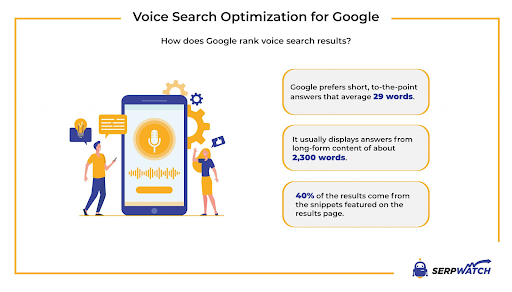
First, focus on long-tail keywords and conversational phrases. Tools like AnswerThePublic can help you find common questions people ask about your industry. Integrating these queries into your content makes it more likely to be picked up by voice search devices. Next, structure your content with clear, concise answers.
A tool like Hemingway Editor can ensure your responses are easy to read and understand. Start with the answer first, then elaborate. This “inverted pyramid” style helps voice search algorithms and users get the information they need quickly. Also, enhance your website’s speed and mobile optimization. Most voice searches are done on mobile devices. Websites that load quickly on smartphones rank better in search results.
Tools like Google’s PageSpeed Insights provide a clear breakdown of your site’s performance and suggest improvements. A fast, mobile-friendly website keeps users happy and engaged, increasing the chances your content will be shared as a voice search answer.
Prioritize local SEO
Local SEO is crucial for businesses targeting community-based customers. When someone uses voice search to find services “near me,” local SEO helps your business appear first. Start by claiming your Google My Business listing. This tool puts your business on the map, quite literally.
If you own multiple locations, use a tool to update more than one GMB listing at once. Ensure your contact information, operating hours, and services are up-to-date. Follow these tips to avoid common local SEO mistakes.
Gather reviews
Next, gather reviews. Positive feedback boosts your visibility in search results. Encourage satisfied customers to leave reviews by sending follow-up emails or texts after a purchase or service. A nifty tip is to include a QR code in these communications to make it easier for customers to access your review page directly. This can increase the likelihood of receiving their feedback.
Use local keywords
Also, use local keywords throughout your website content. For example, if you run a bakery in Orlando, phrases like “Orlando birthday cakes” or “best croissants in Orlando” should appear in your headings and descriptions.
Update your content
Finally, keep your content fresh and relevant. Update your site regularly with local news or events. This not only keeps your audience engaged but also signals to search engines that your business is active and relevant, further improving your local search ranking.
Need a Fresh Marketing Perspective?
Ready to attract more of the right customers, improve your marketing performance, or simply need an experienced partner to guide your next steps? We'd love to help.
What Businesses Can Optimize Voice Search?
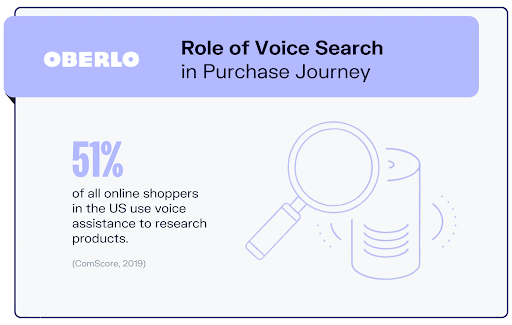
Voice search isn’t just for tech giants. Many businesses can use this tool to strengthen their market presence and customer interactions. Here’s how different sectors can benefit from voice search optimization.
SaaS Brands
SaaS brands can incorporate voice search into their SEO strategy to expand market reach and boost user engagement. If they have already targeted general keywords like “timesheet templates,” they can extend their strategy to include more specific long-tail keyword variations. For example, targeting phrases such as ” examples of timesheet templates for tracking employee time” can significantly alter their SEO approach. Long-tail keywords often align more closely with the specific queries that users, like HR managers, might vocalize when using voice search to find solutions for managing and tracking employee time. This targeted approach is likely to improve search positioning and increase conversions, as users find solutions that match their search intent.
E-commerce Stores
E-commerce businesses stand to gain significantly from voice search. Customers can find products with simple voice commands, creating a faster, more interactive shopping experience. By incorporating voice search optimization, e-commerce sites can increase their visibility when users search for products, leading to higher engagement and sales. This is crucial as over 20% of mobile queries are voice searches.
Healthcare Providers
Digital marketing in regulated industries like medicine can be tricky. Thankfully, healthcare providers can use voice search to make their services more accessible. Patients can quickly find information, book appointments, and get answers to health-related questions through voice-enabled devices. This convenience enhances patient experience and can improve care accessibility, especially for those with mobility or visual impairments.
Measuring the Impact of Voice Search Optimization
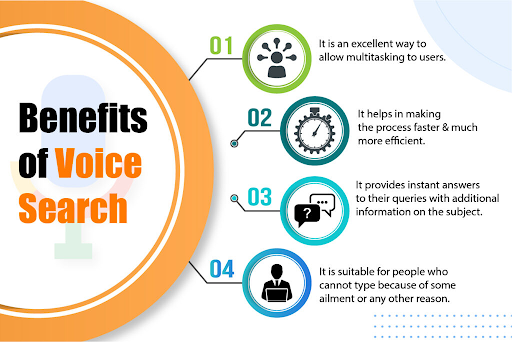
To truly understand the effectiveness of voice search optimization, businesses need the right tools and metrics. Google’s Search Console, for instance, allows marketers to track how often their site appears in voice search results and which queries bring people to their pages.
Another useful tool is Google Analytics, where you can set up segments to monitor visitors who arrive through voice search. Performance measurement should go beyond mere traffic numbers. Engagement metrics like bounce rate, session duration, and conversion rates from voice search queries offer deeper insights. For instance, if voice search users spend more time on the site than traditional search users, it may suggest that the voice search content is particularly engaging or well matched to their needs. Continuous improvement is key.
Regular SEO data analysis allows marketers to tweak and refine their content. For example, if certain pages frequently attract voice search traffic but have high bounce rates, this could indicate that the information isn’t exactly what voice searchers want, or it isn’t presented in an easily digestible format. Adjusting content to better suit voice search users can lead to longer visits and more conversions.
Future Trends in Voice Search
Voice search technology is advancing rapidly. Experts predict that by 2025, 75% of U.S. households will own a smart speaker. This surge will shift how consumers interact with devices, pushing businesses to adapt or fall behind. Consumers will expect faster, more accurate responses. They’ll favor devices that can handle complex tasks with simple voice commands. To keep up, companies must refine their algorithms to better understand and predict user intent.
Tools like Google’s BERT and OpenAI’s GPT are key in this evolution. These tools help analyze the nuances of human speech, making interactions more intuitive. Businesses will also need to focus on personalized experiences. Advanced analytics and AI can tailor responses to user history and preferences, boosting satisfaction and loyalty. As voice search becomes a primary interface, the focus will shift to seamless integration across devices, making every interaction with technology fluid and natural. Businesses that anticipate these changes and innovate accordingly will thrive.
Conclusion
Voice search is swiftly becoming a primary tool for online interaction, reshaping how businesses approach their online presence. With over half of smartphone users using voice search daily, optimizing for this technology is no longer optional but necessary for visibility and engagement. By embracing conversational tones, long-tail keywords, and fast, mobile-optimized websites, businesses can meet customers where they are—speaking to their devices.
Moreover, local SEO and regular content updates play pivotal roles in staying relevant and top-ranked in search results. As voice search technology continues to evolve, staying ahead means continually adapting strategies to meet these changing demands effectively. Businesses that invest in understanding and optimizing for voice search will better serve customers and capture new opportunities in this dynamic digital landscape.
Author Bio: Scarlett Finley is a business-savvy affiliate marketing specialist with a wealth of experience in high-growth software companies. She excels at consulting businesses on how to leverage SAAS tools to achieve their growth objectives. In her spare time, she loves exploring the Scottish Highlands and training for her next tough-mudder challenge.
Let's Talk Strategy
Every business has unique marketing challenges. We'll help you identify opportunities, refine your messaging, and build a plan designed around your goals.
Let's Connect