Why A/B Testing Is Essential for Digital Marketing Success

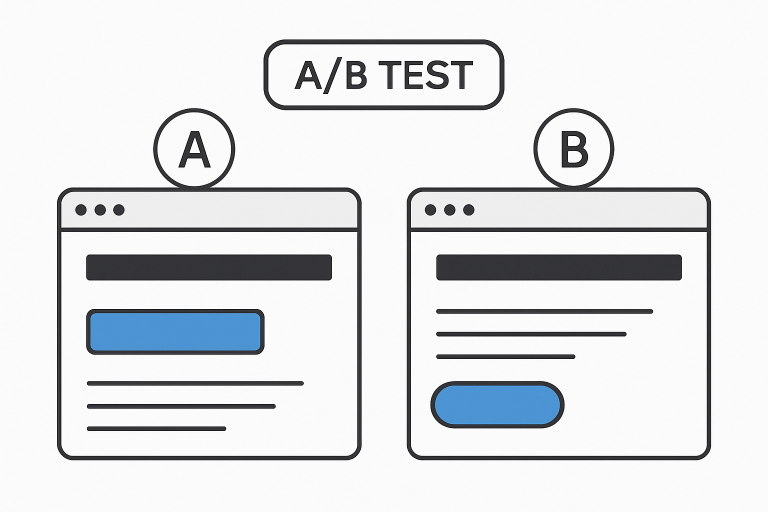
Understanding users' needs and behaviors is crucial for standing out and achieving sustained growth in today's world. A/B testing, also known as split testing, replaces guesswork with a scientific approach where real data supports every change. This process enables businesses to experiment with various versions of web pages or app features and identify which one yields the best performance.
A/B testing empowers organizations to fine-tune the user experience. It also directly impacts key metrics, including conversion rates, engagement, and revenue. By making informed decisions, brands can deliver experiences optimized for their audiences. To take your experimentation to the next level, consider exploring conversion rate optimization services to pair expert insight with your testing initiatives.
Importance of A/B Testing
A/B testing is crucial for both defining what works and helping teams quickly adapt to evolving digital trends and competitors. By continuously seeking improvements, your business stays relevant to your users and ahead of the competition. Businesses using robust A/B testing processes consistently deliver higher customer satisfaction and loyalty.
Key Elements to Test
To maximize the impact of your A/B campaigns, target fundamental website and app components that influence user experience and action. Testing priorities should include:
- Headlines and Subheadings: Experiment with various messaging styles to determine which one most effectively captures user attention.
- Call-to-Action (CTA) Buttons: Compare differences in color, text, and size to optimize clicks and conversions.
- Images and Videos: Analyze how visual content affects user engagement or subsequent steps, such as sign-ups or purchases.
- Page Layout and Design: Evaluate which layouts enhance navigation and increase time spent on the page.
- Content Length and Style: Test short snippets against more comprehensive details to align with your audience’s preferences.
Iterating on these elements not only clarifies what users value most but can spark new ideas for creative experimentation in future campaigns.
Best Practices for Effective A/B Testing
The insights from A/B testing are only as good as your methodology. Following industry best practices will help you uncover actionable, reliable results:
- Set Clear Objectives: Before launching an experiment, clearly define what you hope to achieve (such as increasing sign-ups or reducing bounce rates).
- Test One Variable at a Time: Limiting each test to a single change ensures you know exactly what impacts the outcome.
- Establish Statistical Significance: Conduct tests long enough and with a large enough audience to generate confidence in your decisions.
- Segment Your Audience: Break down results by demographics, traffic source, or device for deeper insight into user needs.
- Document and Analyze Results: Meticulously track your experiments so you can learn from past efforts and refine future tests.
Nielsen Norman Group’s guidance for practitioners provides a more technical explanation of measuring statistical significance in split testing.
Need a Fresh Marketing Perspective?
Ready to attract more of the right customers, improve your marketing performance, or simply need an experienced partner to guide your next steps? We'd love to help.
Leveraging AI and Machine Learning
As A/B testing grows more sophisticated, artificial intelligence (AI) and machine learning are transforming how companies experiment and iterate. These advances can:
- Predict how users respond to design and content based on historical data trends.
- Automate experiment processes to enable rapid and ongoing optimization without requiring constant manual oversight.
- Reveal subtle patterns in user behavior that may go unnoticed through traditional analysis.
AI tools can automatically allocate more traffic to better-performing variants in real-time, expediting feedback cycles and improvements. These innovations enable brands to deliver nuanced and highly personalized experiences on a large scale.
Case Studies of Successful A/B Tests
Several organizations showcase the concrete benefits of strategic A/B testing:
- Optimizing Advertising Campaigns: In one example, an advertiser tested emotionally driven narratives versus feature-oriented creatives on Facebook. The feature-focused content reduced cost-per-acquisition by 25%, helping refine the campaign’s overall strategy.
- Enhancing E-commerce Performance: A retail brand used inventory segmentation and staggered A/B testing over three months. By narrowing their focus and adjusting digital spend, they achieved 1.5 times faster results and saved a significant portion of their advertising budget.
Real-world testing drives rapid learning, helps avoid costly missteps, and enables businesses to establish repeatable growth processes.
Common Pitfalls to Avoid
Unsound A/B tests can yield misleading insights. Steer clear of these frequent mistakes:
- Testing Too Many Variables Simultaneously: Dilutes clarity on what’s driving results.
- Insufficient Sample Size: Draws unreliable or incomplete conclusions.
- Ignoring External Factors: Factors like seasonality or news events can skew your data.
- Overlooking User Segments: Different cohorts may respond differently to the same change.
Focusing on scientific rigor and contextual analysis is essential to extract lasting value from each experiment.
Conclusion
Mastering A/B testing unlocks the ability to fine-tune your digital offering in ways that matter most to users. By systematically refining everything from messaging to product design, you can prioritize data and ensure your solutions work for your audience.
Let's Talk Strategy
Every business has unique marketing challenges. We'll help you identify opportunities, refine your messaging, and build a plan designed around your goals.
Let's Connect